Write a review

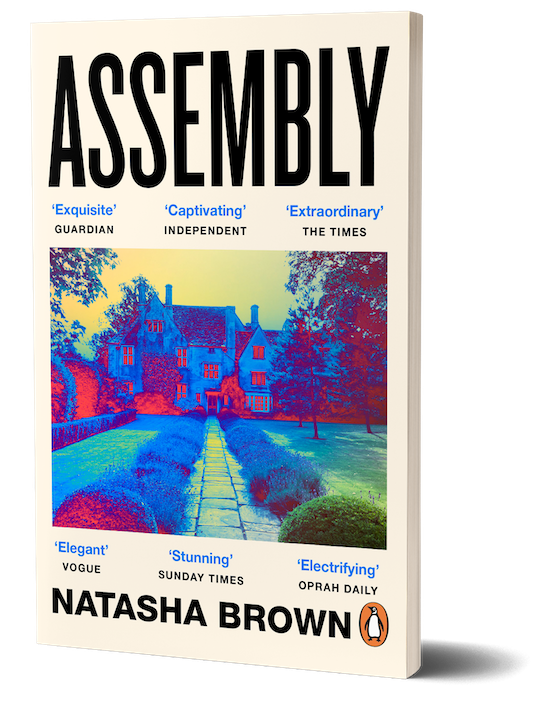
Assembly Natasha Brown


Links to Buy

Come of age in the credit crunch. Be civil in a hostile environment. Step out into a world of Go Home vans. Go to Oxbridge, get an education, start a career. Do all the right things . Buy a flat. Buy art. Buy a sort of happiness. But above all, keep your head down. Keep quiet. And keep going.

The narrator of Assembly is a Black British woman. She is preparing to attend a lavish garden party at her boyfriend’s family estate, set deep in the English countryside. At the same time, she is considering the carefully assembled pieces of herself. As the minutes tick down and the future beckons, she can’t escape the question: is it time to take it all apart?

About the author

Natasha Brown has spent a decade working in financial services, after studying Maths at Cambridge University.

She was a 2019 London Writers Award recipient, a 2022 Burgess Fellow at the University of Manchester’s Centre for New Writing, and a Women’s Prize x Good Housekeeping Futures Award finalist.

Her debut novel Assembly was shortlisted for the Folio Prize, the Goldsmiths Prize and the Orwell Prize for Fiction.

Reviews

There are no reviews yet.

Be the first to review “Assembly Natasha Brown”

Your email address will not be published. Required fields are marked *

1

Did you find the author’s writing style easy to read or hard to read? Why?

2

What is the significance of leaving many of the characters unnamed?

3

What are the advantages and disadvantages of assimilation?

4

Why are well-meaning liberals sometimes worse than people who are openly prejudiced?

5

Is refusing treatment suicide?

6

After the protagonist is promoted, her colleagues belittle her achievement by claiming that she's a she's effectively a "diversity hire". Have you ever been in a similar situation? How did you handle it?

7

How do you define success? And do you know what you do you know what your cultural capital is?

8

The book is written in what can be described as minimalist prose, and yet, Brown manages to examine all aspects of being a black woman. How does she achieve this in just 100 pages?

9

When is the workplace relationship between two consenting adults acceptable and when is it not?

10

Is victimhood a choice?

11

Was there any part of the plot or aspects of the characters that frustrated or upset you? If so, why?

12

How thought-provoking did you find the book? Did the book change your opinion about anything, or did you learn something new from it? If so, what?

13

What are the central themes of the book? How well do you think the author did at exploring them?

14

Compare this book to other books you have read covering the same or similar themes. How are they the same or different?